In an agricultural context marked by climate change and the search for sustainable solutions such as agroecology, marine algae extracts are emerging as natural allies to strengthen the vitality of crops. Used in the form of biostimulants, they act in synergy with plants to stimulate their growth, improve their resilience and optimize nutrient uptake.
Derived from brown, red, green or microalgae, these products provide a concrete response to current agronomic challenges. Through this page, learn more about seaweed-based biostimulants: their mode of action, their benefits, the species used, and best application practices.
Seaweed-based Biostimulant: a natural solution to strengthen your crops
A biostimulant is a naturally-derived product intended to strengthen the physiological functions of plants without replacing fertilizers or plant protection products. It acts on the vigor, nutrition, tolerance to abiotic stress or quality of crops. Biostimulants do not directly nourish the plant: they stimulate its functioning to optimize its potential. And among the different existing families – plant extracts, amino acids, microorganisms… – seaweed-based biostimulants hold a special place.
Rich in bioactive compounds, trace elements and polysaccharides, marine algae extracts have been used for several decades in agricultural technical itineraries. Now often formulated as liquid solutions, seaweed-based biostimulants are integrated into a logic of sustainability and reasoned agriculture. Their effectiveness is based on stimulating and protective effects, adapted to many types of crops.
How do seaweed-based biostimulants improve plant health?
Marine algae extracts act on several physiological levers to strengthen the vitality of plants. They stimulate enzymatic activity, promote the production of antioxidant compounds and activate the signaling pathways related to plant defense. Thus, these mechanisms reinforce tolerance to abiotic stress (drought, heat, salinity, cold), now a major challenge in agriculture.
Seaweed-based biostimulants also improve the absorption of mineral elements, particularly trace elements such as iron, copper or zinc. By supporting the root system and increasing the availability of nutrients, they thus promote more uniform growth and better plant nutrition.
They can be applied as a foliar application or through irrigation water, at key stages of the vegetative cycle: regrowth, pre-flowering, stress phases or post-planting. Their use often allows to improve agricultural quality and yield, while reducing dependence on certain traditional inputs.
What types of algae are found in these products?
Seaweed-based biostimulants are made from marine species rich in bioactive compounds: polysaccharides, amino acids, natural hormones and trace elements. We can distinguish three main families of algae according to their pigmentation and composition, as well as microalgae, which are increasingly present in certain formulations.
Brown algae: the most commonly used in agriculture
- Ascophyllum nodosum: harvested on the North Atlantic coasts, it is known for its richness in alginates, mannitol, phlorotannins and cytokinins. It promotes root growth, improves flowering and enhances tolerance to abiotic stress.
- Ecklonia maxima: originating from the temperate zones of the Southern Hemisphere, it is distinguished by its high content of natural auxins, which stimulate rooting and vegetative development.
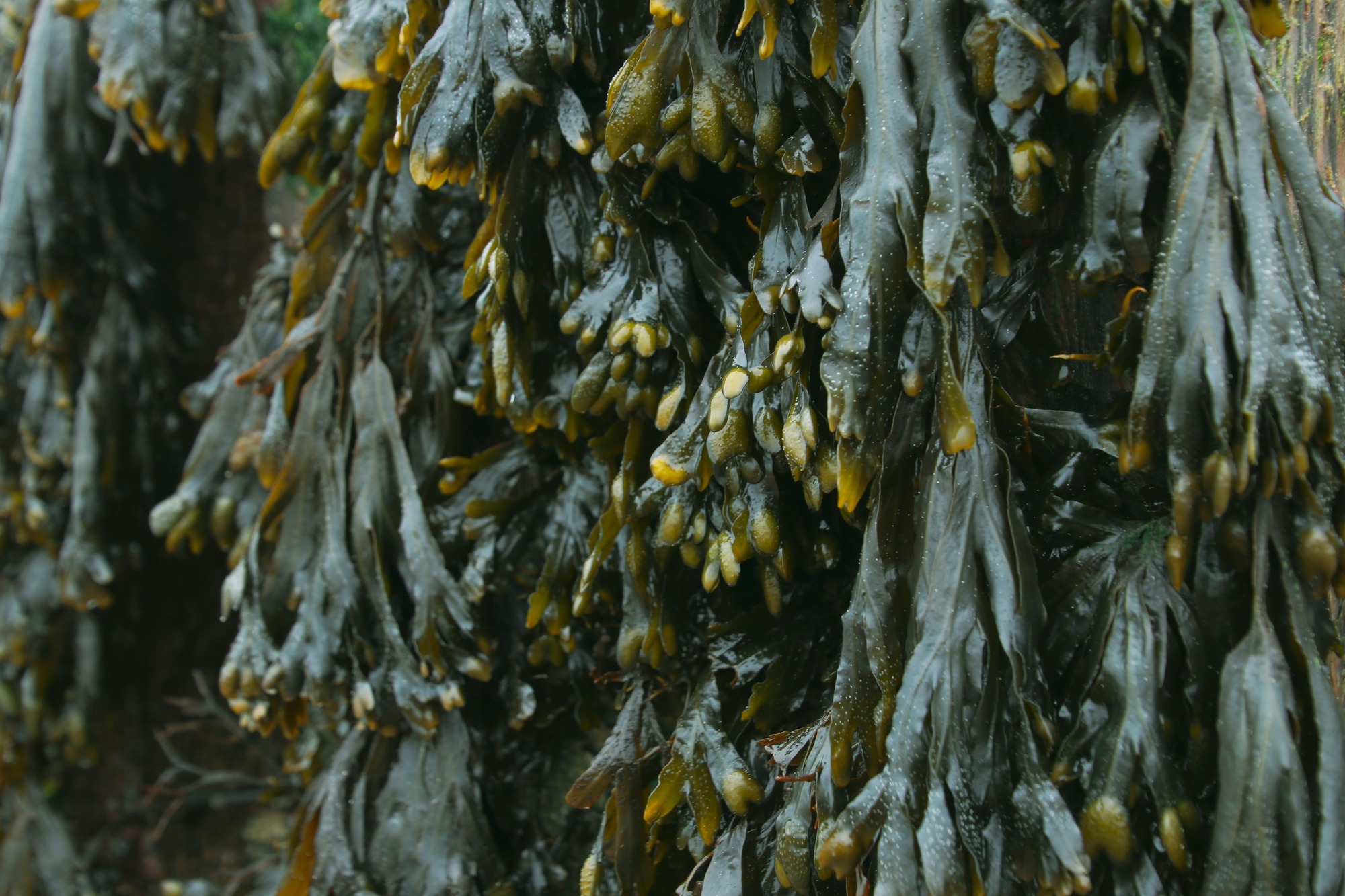
Other brown algae such as Laminaria or Fucus can be used for their content of complex polysaccharides and trace elements.
Red and green algae: complementary sources
- Red algae, such as Palmaria palmata and Chondrus crispus, are characterized by specific pigments (phycoerythrin) and sulfated polysaccharides that are beneficial for stimulating natural defenses.
- Green algae, such as Ulva lactuca or Enteromorpha intestinalis, are richer in chlorophyll and can be used both for their protein content and for their stimulating effect on photosynthesis.
Microalgae: spirulina, chlorella and other unicellular species
Among the best known, spirulina and chlorella are used for their high concentration of amino acids, vitamins, antioxidants and bioactive peptides.
They act in synergy with marine algae to strengthen the vitality and physiological balance of plants.
How to properly use seaweed-based biostimulants for your crops?
Seaweed-based biostimulants can be adapted to many crops, depending on the physiological stage and the method of application.
- Field crops and plantations: on wheat, corn, beet, sunflower or rapeseed, the objective is to support vegetative growth, strengthen rooting, and improve resilience to climatic hazards. Application is generally done post-emergence, during the regrowth phase or before a predictable stress episode.
- Perennial crops: in viticulture, arboriculture or olive growing, algae extracts are often used pre-flowering, at fruit set or after mechanical interventions such as pruning. They contribute to better recovery, uniform flowering and better tolerance to thermal or water stress.
- Fruit & vegetable farming and horticulture: on leafy vegetables, fruit vegetables or ornamental plants, seaweed-based biostimulants promote regular growth, better vigor of young plants and optimal visual quality. They are generally integrated from planting or as a foliar treatment during sensitive phases of the cycle.
Please note that these recommendations are general and may vary depending on the crops, soil and climatic conditions, and formulations. For advice tailored to your technical itineraries, it is always best to contact the suppliers and experts in the sector marketing seaweed-based biostimulants.
Integrate algae extracts into your agronomic strategy
Naturally boost the vitality of your crops by integrating seaweed-based biostimulants into your practices. By strengthening plant nutrition, growth and resilience, these innovative solutions are adaptable to all types of crops. So make the choice of a sustainable, effective and compatible technical lever with the requirements of modern agriculture, in the face of current climatic and economic challenges.
Follow our News

Agrauxine and Yeast Efficiency: Yeast-based biostimulants for agriculture
What is Yeast Efficiency? Agrauxine by Lesaffre is pleased to introduce you to the Yeast Efficiency* concept to showcase innovative yeast-based biostimulants. This approach combines scientific expertise and sustainable production to address the challenges of modern agriculture, such as reducing the use of chemical inputs, preserving soil health, and adopting agroecological practices.The objectives of yeast […]

New Biostimulants-Agriculture Website: Your Go-To Source for Information on Biostimulants!
We are thrilled to announce the update of our Biostimulants-Agriculture.com website! Designed to help farmers and agricultural professionals better understand the role of biostimulants in agriculture, it now provides detailed information on: What biostimulants are, How they are produced and how they work, How they can secure and optimize agricultural yields, The market and […]

Agrauxine’s game-changing Yeast Efficiency: a range of yeast-based biostimulants!
Unveiled at the end of November at the Biostimulants World Congress 2023 in Milan, Yeast Efficiency is rethinking the rules of biostimulation with a range of yeast-based solutions. Innovative, sustainable and high-performance products designed by Agrauxine, which have won over distributors, producers, scientists and stakeholders in the world of agriculture seeking cost-effective and environmentally-friendly solutions. […]