
What is Yeast Efficiency?
Agrauxine by Lesaffre is pleased to introduce you to the Yeast Efficiency* concept to showcase innovative yeast-based biostimulants. This approach combines scientific expertise and sustainable production to address the challenges of modern agriculture, such as reducing the use of chemical inputs, preserving soil health, and adopting agroecological practices.The objectives of yeast efficiency are to:
- Secure yields
- Optimize agricultural productivity
- Preserve natural resources
The triple action of yeast in biostimulation
Yeasts are used because most crops suffer from abiotic stresses (drought, extreme temperatures, salinity), and these stresses threaten the quality factors of crops, while demand is growing strongly. Faced with this challenge, yeast-based biostimulants represent a natural and effective solution to secure agricultural production. Yeasts have several effects that depend on the form used:
- Fermentation metabolites: Limit the impact of abiotic stress
- Yeast extracts: Improve crop quality
- Yeast autolysates: Optimize plant metabolism
Characterized and innovative products
Yeasts in biostimulation represent a new innovative approach in a field where formulations are mainly based on substances with a more developed history, such as algae or animal and plant extracts. Although microorganisms, whether fungi or bacteria, are new and less known on the market, research shows proven effectiveness. Thus, each product in the Yeast Efficiency range is the subject of 3 to 6 years of research in different climatic regions and countries to characterize the reliability and performance of the product.
The shortest path to performance and sustainability
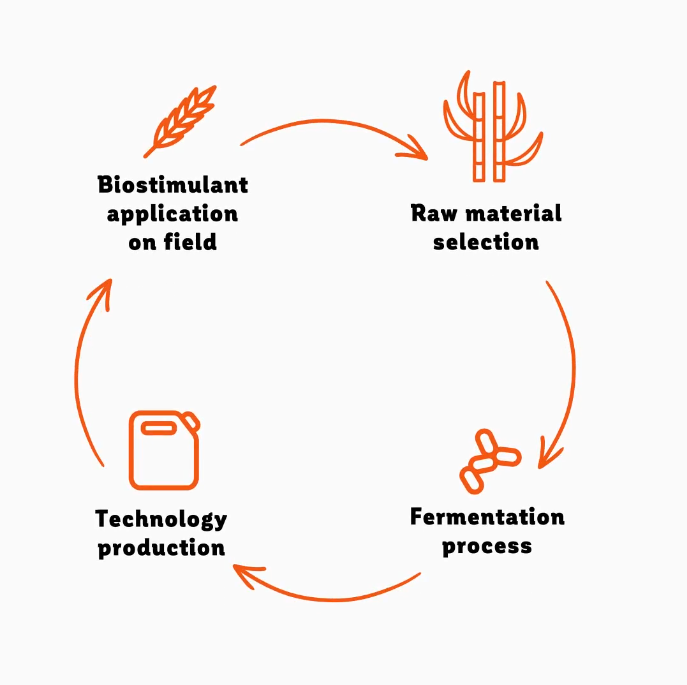
The manufacture of yeast-based biostimulants is part of a sustainable approach, starting with the selection of plant-based raw materials from beet or sugarcane. These natural substrates serve as an optimal fermentation medium for cultivating the yeast, developing its derivatives, or developing specific fermentation products. Thanks to advanced formulations, these processes result in the creation of high-performance biostimulation solutions, directly applicable to crops.
This virtuous production approach creates versatile agricultural biostimulants, compatible with both conventional practices – as a complement to traditional fertilizers and plant protection products – and with the specifications of organic farming. The application of yeast-based biostimulants ensures a dual action of efficiency and crop security, allowing to maintain optimal performance levels throughout the production cycle, even in difficult environmental conditions.
The functional plurality of yeast is not limited to biostimulation alone. Agrauxine and its expertise in the characterization of yeast extend it to all its functions for the production of agricultural biosolutions, whether biostimulation, biocontrol, or bionutrition.